I’ve Tested Them All: Best Air Purifier Brands for Home (2026)
Remember that feeling? Waking up with a stuffy nose, dust motes dancing in every sunbeam, and a lingering scent of… something? Yeah, I’ve lived that life for years. Between seasonal allergies, a shedding dog, and just general city grime, my home air used to feel heavy. I coughed, sneezed, and spent way too much time wiping down surfaces. It finally hit me: I needed an air purifier. Not just any air purifier, though. I wanted one that actually worked. Over the last decade, I’ve bought them, returned them, cursed at them, and celebrated them. I’ve learned what’s pure marketing fluff and what truly makes a difference. My goal today is to cut through the noise and tell you what I’ve found to be the best air purifier brands for home in 2026, based on my own wallet and lungs.
The Dirty Truth About “Air Quality” Marketing Claims
Before you even think about specific brands, you need to understand how these things are sold. I’ve seen so many brands throw around terms that sound great but mean absolutely nothing. It’s like buying a car based on how shiny the hubcaps are. You’re looking for clean air, not just a fancy label. I learned this the hard way, sifting through spec sheets and understanding the actual science behind what makes an air purifier effective. Most of the time, the cheaper options are cutting corners here, and you’re just buying a noisy fan.
What “HEPA-Type” Really Means
This one drives me nuts. You’ll see ‘HEPA-type’ or ‘HEPA-like’ filters advertised everywhere, especially on budget models. Sounds good, right? It means almost nothing. A True HEPA filter is certified to capture 99.97% of airborne particles 0.3 microns in size. This includes pollen, pet dander, dust mites, and most mold spores. ‘HEPA-type’ filters typically capture far less, often closer to 90% or even 80% of particles, and they might only test for larger particles. That 10-20% difference is huge when you’re talking about allergens and irritants floating around your house. If it doesn’t say ‘True HEPA,’ assume it’s inferior. Seriously, this is a non-negotiable for me now.
Why CADR Ratings Matter More Than You Think
CADR stands for Clean Air Delivery Rate. This is a big one. It measures how quickly the air purifier removes smoke, dust, and pollen from a room. You’ll see three numbers: one for smoke, one for dust, and one for pollen. The higher the number, the faster and more effective the purifier is for that specific pollutant. Many brands will give you a recommended room size, but that’s often optimistic. I always compare the CADR to my actual room square footage. For example, if a purifier has a CADR of 250 for dust, it means it can filter the equivalent of 250 cubic feet of clean air per minute. A good rule of thumb I use: find a CADR that’s at least two-thirds of your room’s square footage, but ideally, you want it to match or exceed. If a purifier is rated for a 300 sq ft room but only has a CADR of 150 for dust, it’s going to struggle.
The Hidden Cost of Cheap Filters
You snagged a purifier for $80? Great! Now check the filter replacement cost. Some brands sell their proprietary filters for $50-$70 each, and you might need to replace them every 3-6 months. That cheap initial purchase turns into a money pit. I’ve made this mistake. Always look up the replacement filter prices and recommended schedules before you buy the unit. It’s an ongoing cost that really adds up over the years. This is where those seemingly expensive upfront units often save you money long-term.
My Hard-Learned Lessons: What to Avoid in an Air Purifier

Here’s my blunt advice: don’t bother with anything that promises too much, or tries to sterilize your air with gimmicks. I’ve tried some of these features and honestly, they either don’t work, cost too much, or worse, introduce new problems. Stick to the basics that science proves effective. I’ve wasted money on these, so you don’t have to.
- The Trap of UV-C Lights: Many purifiers advertise UV-C lights to kill germs and viruses. Sounds fantastic, right? In reality, for a UV-C light to effectively kill microorganisms, it needs significant exposure time and intensity. The air rushes through an air purifier too quickly for the UV-C bulb to do much, especially the small ones typically found in home units. Plus, these bulbs need to be replaced, adding another recurring cost. Some studies even suggest they can generate trace amounts of ozone, which is an irritant. I’ve bought units with them, and honestly, I saw no difference in illness rates or overall air quality. It’s often just a marketing add-on.
- Ionizers and Ozone Concerns: Some purifiers use ionizers to ‘clump’ particles together, making them easier to filter or fall out of the air. While some ionizers produce negligible amounts of ozone, others can produce enough to be a concern, especially for people with respiratory issues. Ozone (O3) is a lung irritant and a major component of smog. The California Air Resources Board (CARB) certifies air purifiers that meet strict ozone emission limits. I always check for CARB certification. If a unit has an ionizer, I ensure it’s specifically certified not to produce harmful ozone levels. My personal preference? I just avoid ionizers altogether. True HEPA and activated carbon are enough.
- Overpaying for “Smart” Features: WiFi connectivity, app control, fancy LED displays—these can be cool, but they rarely improve air quality. I’ve paid extra for units that connect to my phone, only to find I adjust settings once and then never use the app again. Sometimes the ‘auto’ mode, which uses air quality sensors, is useful, but many cheaper units have decent auto modes without all the smart home integration. For me, reliability and filtration power outweigh any ‘smart’ bells and whistles that just inflate the price. Focus your budget on better filters and a stronger fan, not a touchscreen.
The Non-Negotiables: What a Good Air Purifier Needs to Have (2026)
Alright, so we’ve covered what to avoid. Now, let’s talk about what absolutely essential features you should be looking for. After all these years, I’ve boiled it down to a few core things that truly make a difference in your home’s air quality. If a purifier doesn’t have these, it’s not worth your money in 2026.
What is “True HEPA Filtration” and why is it key?
As I mentioned, ‘True HEPA’ is critical. This isn’t just a fancy label; it’s a performance standard. A filter certified as True HEPA must capture 99.97% of particles as small as 0.3 microns. Why 0.3 microns? Because that’s considered the ‘Most Penetrating Particle Size’ (MPPS) – the size of particle that’s hardest for filters to catch. Smaller and larger particles are actually easier. So, if a filter can catch 99.97% of those tough 0.3-micron particles, it’s doing its job against almost everything else: dust, pollen, pet dander, mold spores, and many bacteria and viruses. Without this, you’re just moving air around, not cleaning it effectively.
How does Activated Carbon deal with odors and VOCs?
Beyond particles, air purifiers also need to tackle odors and volatile organic compounds (VOCs). Think cooking smells, pet odors, smoke, cleaning product fumes, paint smells, and off-gassing from furniture. A True HEPA filter alone won’t touch these. This is where a robust activated carbon filter comes in. Activated carbon is porous, with a huge surface area that chemically absorbs these gaseous pollutants. The more carbon, and the higher quality it is (often granular carbon is better than a thin carbon mesh), the more effective it will be. Cheap units often have a thin layer of carbon woven into the pre-filter – that’s barely enough. Look for a separate, thick layer of activated carbon for real odor removal. This is crucial if you have pets or cook frequently.
What does Room Size and ACH mean for purifier effectiveness?
This is where many people get it wrong. You need a purifier that’s correctly sized for your room. ACH stands for Air Changes Per Hour. This tells you how many times the air in a room is theoretically filtered in one hour. For general improvement, 2-3 ACH is okay. For allergy sufferers or pet owners, I always recommend at least 4-5 ACH. To figure this out, you take your room’s square footage, multiply it by the ceiling height (usually 8 or 9 feet), and then compare that cubic footage with the purifier’s CADR. The general rule from manufacturers usually aims for 2 ACH. My advice: always oversize slightly. If your room is 250 sq ft, don’t buy a purifier rated exactly for 250 sq ft. Get one rated for 300-350 sq ft. It will run quieter and more effectively on lower fan speeds, extending filter life and saving your ears.
My Top 3 Air Purifier Brands for Different Homes
Okay, now for the good stuff. After cycling through dozens of units over the years, these are the brands that consistently impress me. They deliver on their promises, have reasonable filter costs, and just flat-out work. I’m not sponsored by any of them; this is just what my family and I actually use and recommend in 2026.
| Brand/Model | Best For | Key Features I Like | Approx. Price (2026) | Filter Cost (Annual) |
|---|---|---|---|---|
| Coway Airmega 200M | All-Rounder, Bedrooms, Living Rooms (up to 360 sq ft) | True HEPA + Activated Carbon, Air Quality Sensor, Quiet Operation, Stylish Design, Eco Mode. CADR: 246 (dust). | $200 – $250 | $100 – $120 |
| Levoit Core 400S | Budget-Friendly, Mid-Size Rooms (up to 400 sq ft), Smart Features | 3-in-1 Filtration (Pre, True HEPA, Carbon), Smart App Control, Quiet Mode, Air Quality Sensor. CADR: 260 (dust). | $180 – $220 | $80 – $100 |
| Blueair Classic 605 | Large Spaces, Serious Allergies/Asthma (up to 775 sq ft), High ACH | HEPASilent™ technology, High CADR (500 dust), Durable Metal Housing, Quiet for its power. | $600 – $700 | $400 – $480 |
Let me break down why I pick these specific models:
- Coway Airmega 200M: This is my go-to recommendation for most people. It’s a workhorse. I’ve had one running in my living room for years, and it just keeps chugging. The design is sleek, it’s remarkably quiet on lower settings (around 24 dB on low), and its air quality sensor is genuinely responsive. The separate activated carbon filter is thick enough to tackle my dog’s odors effectively. It’s built like a tank and the filter changes are super easy. For about $200-$250, it’s an incredible value.
- Levoit Core 400S: If you want excellent filtration without breaking the bank, and you like smart features, the Levoit Core 400S is a fantastic choice. I use a Core 300S in my office, and the 400S offers similar performance for larger rooms. It’s got a solid 3-stage filtration system. The app control is actually useful here for setting schedules or checking air quality remotely. It’s also surprisingly quiet for its output (around 24-52 dB depending on fan speed) and the filters are very affordable. For a mid-range room, you’d be hard-pressed to find better at this price point.
- Blueair Classic 605: Now, if you have a massive open-concept living area, or severe allergies and need serious air changes, the Blueair Classic 605 is what I’d buy. Yes, it’s expensive, but the filtration power is immense. Blueair uses a unique HEPASilent™ technology that combines electrostatic charging with mechanical filtration, allowing them to use less dense filters that push more air more quietly. This unit can handle huge rooms with ease, cycling the air up to 5 times an hour. It’s not the quietest on its highest setting (around 62 dB), but for its sheer power, it’s impressive. The filter costs are higher, but given its large coverage, it might replace two smaller units.
Maintenance Costs: Filters Aren’t Cheap (and When to Replace Them)
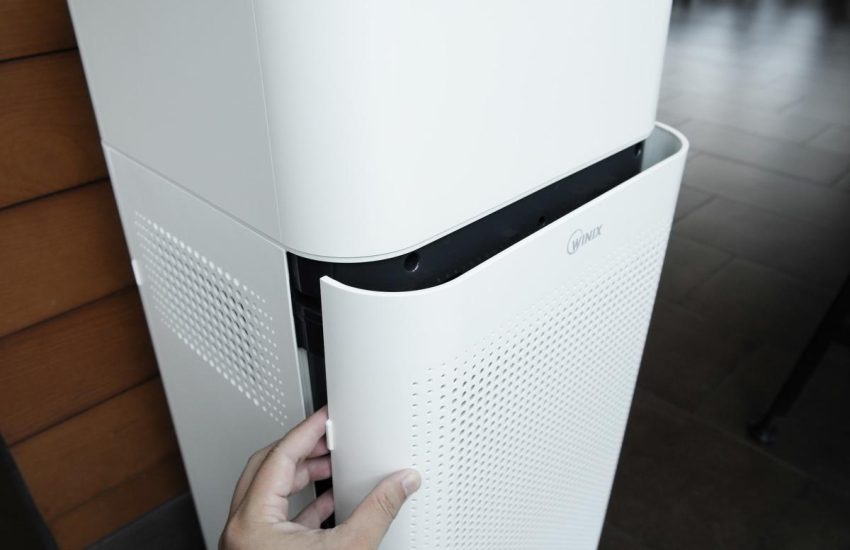
Buying the purifier is just the start. Filters are the ongoing cost, and you absolutely cannot skimp on them. I’ve seen people complain their air purifier stopped working, only to find they haven’t changed the filter in two years. It’s like driving a car without ever changing the oil. Eventually, it breaks down. Air purifiers work by pulling air through filters. When those filters get clogged, the unit struggles, becomes less efficient, and can even become a breeding ground for bacteria if moisture gets trapped. Pay attention to the replacement schedule.
OEM vs. Third-Party Filters: The Risk
It’s tempting to save a few bucks by buying off-brand filters on Amazon. I’ve done it. Sometimes it works out okay. But often, these third-party filters don’t meet the True HEPA standard, even if they claim to. Their activated carbon might be sparse or low quality. You also risk improper fit, which can lead to air bypassing the filter entirely. I’ve had filters that were slightly too small, creating gaps around the edges. What’s the point of a filter if dirty air just goes around it? For critical items like air purifiers, I almost always stick with OEM (Original Equipment Manufacturer) filters. The peace of mind is worth the extra $10-$20.
How Often I Actually Change Mine
Most manufacturers recommend replacing True HEPA filters every 6-12 months and pre-filters/carbon filters every 3-6 months. My real-world experience is a bit different. With a shedding dog and living in a moderately polluted area, I find myself changing the entire filter pack (which includes the activated carbon) every 6-7 months on my Coway. The air quality sensor on units like the Coway or Levoit is helpful here; it gives you a good indication when the filter is truly saturated. If you live in a very dusty environment, or have multiple pets, you might need to replace them more frequently.
Estimating Your Annual Filter Budget
So, let’s crunch some numbers. For a Coway Airmega 200M, the combined True HEPA and activated carbon filter pack usually costs about $50-$60. If I replace it every 6-7 months, that means roughly two filter packs a year, putting my actual annual cost at around $100-$120. For the Levoit Core 400S, the 3-in-1 filter is typically $40-$50, and I find it lasts about 6-8 months, so roughly $80-$100 annually. The Blueair Classic 605 filters are larger and pricier, around $100-$120 each. You need two of them for the unit, and they last about 6 months. So, that’s $400-$480 a year! High performance often means higher running costs. Always factor this into your decision. It’s not just the upfront cost, it’s the cost of breathing clean air.
My Final Verdict on Air Purifiers You Can Trust
Look, the bottom line is this: good air purifiers aren’t cheap, but they are absolutely worth it if you care about your indoor air quality. Don’t fall for marketing gimmicks or underpowered units. Invest in True HEPA and activated carbon from a reputable brand that offers sensible filter replacement costs. For most homes, the Coway Airmega 200M or Levoit Core 400S are your best bet in 2026. You’ll breathe easier, I promise.