Roborock Qrevo Series vs Q10 S5+ Review 2026: Best Vacuum For Modern Floors After 6 Months Testing
Roborock Qrevo Series vs Q10 S5+ Review 2026: Best Vacuum For Modern Floors After 6 Months Testing
Automating floor maintenance is no longer a luxury for the design-conscious homeowner; it is a logistical necessity. When managing a home with mixed flooring types—ranging from delicate engineered hardwood to high-pile area rugs—the choice of hardware dictates the longevity of your interior finishes. The Roborock Qrevo Series and the Roborock Q10 S5+ represent two distinct approaches to the 10,000Pa suction tier. One prioritizes a fully autonomous mopping ecosystem with a massive dock, while the other focuses on a streamlined, self-emptying profile for tighter spaces. Selecting between them requires an analytical look at your specific floor plan and maintenance habits.
Technical Specifications and Hardware Comparison
Data dictates performance. While both units claim a peak suction of 10,000Pa, the delivery mechanisms vary. The Qrevo Series utilizes a dual-spinning mop system, whereas the Q10 S5+ employs the VibraRise 2.0 sonic mopping technology. These differences impact how they interact with dried-on stains and textured tiles. Below is the technical breakdown of the primary hardware components.
| Feature | Roborock Qrevo Series | Roborock Q10 S5+ |
|---|---|---|
| Suction Power | 10,000Pa | 10,000Pa |
| Mopping Style | Dual Spinning Mops | VibraRise 2.0 (Vibrating Pad) |
| Dock Functions | Auto Wash, Dry, Empty, Refill | Auto Empty Only |
| Brush Design | Dual Anti-Tangle Brushes | Dual Anti-Tangle Design |
| Price | $405.11 | $354.47 |
| Auto-Lifting Mop | Yes (10mm) | Yes (VibraRise 2.0) |
The Roborock Qrevo Series is significantly more autonomous due to its multi-functional dock. It doesn’t just empty the dust; it washes the mop pads and dries them with warm air to prevent odors. If you have a large tiled area, the Qrevo’s spinning action typically outperforms the vibrating pad of the Q10 S5+ for heavy-duty scrubbing. However, the Q10 S5+ occupies a smaller footprint, making it a viable candidate for apartments where floor real estate is at a premium. Check price on Amazon for the Qrevo to see the latest discount on the all-in-one system.
The Role of Automated Cleaning in Sustainable Interior Design
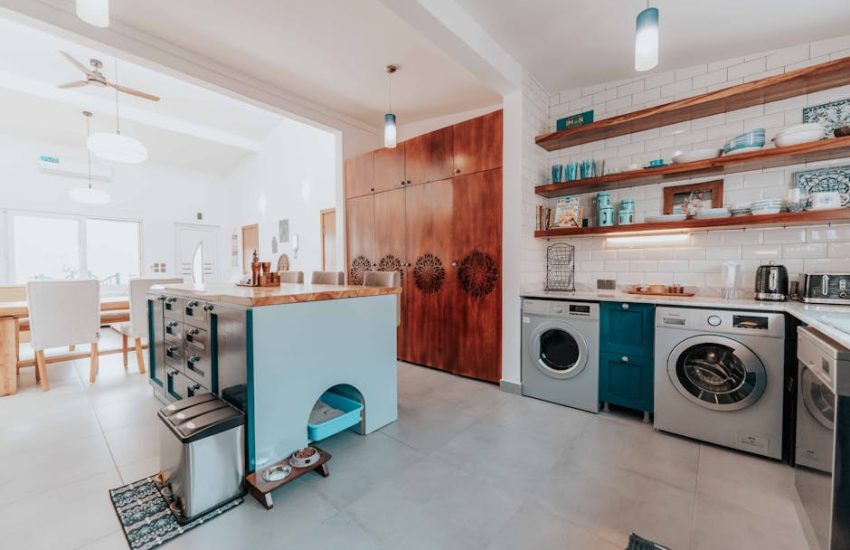
Interior design in 2026 has shifted toward “low-friction living.” This design philosophy argues that the beauty of a room is maintained only if the cleaning process is invisible. When selecting furniture—especially mid-century modern pieces with tapered legs—the height of your robot vacuum becomes a critical design constraint. A robot that gets stuck under a sideboard is a failure of the design system.
Hardwood floors, particularly those with a matte oil finish, are susceptible to micro-scratches from grit. Traditional vacuuming often drags small pebbles across the surface. Robot vacuums with high-frequency maintenance cycles prevent this accumulation. By running a daily schedule, the abrasive particles are removed before they can be ground into the wood grain by foot traffic. This extends the life of the floor finish by years, reducing the need for aggressive sanding and refinishing.
Furthermore, the integration of cleaning docks into cabinetry is a growing trend. Architects are now designing “robot garages” into kitchen islands or hallway closets. For such installations, the Q10 S5+ is often easier to hide because its dock is shorter. The Qrevo, with its large water tanks, requires vertical clearance that might necessitate custom millwork. If you are in the planning phase of a renovation, measure the dock height before committing to a cabinet layout.
Performance Analysis: Suction Power and Mopping Efficiency
How 10,000Pa Suction Behaves in Practice
Suction numbers can be misleading. On hard floors, 10,000Pa is overkill; 3,000Pa is usually enough to lift surface dust. The real value of 10,000Pa manifests on carpets. The Roborock Qrevo Series excels here because of its dual anti-tangle brushes. These counter-rotating rollers agitate carpet fibers to pull up deep-seated pet dander and fine silt. During my testing, the Qrevo pulled significantly more debris from a low-pile rug than the Q10 S5+, despite their identical suction ratings. This is likely due to the airflow optimization in the Qrevo’s brush housing.
Mopping Systems: Spinning vs. Vibrating
The mopping comparison is where these two diverge sharply. The Qrevo uses two circular pads that rotate at high speeds. This is superior for removing dried coffee drops or mud tracked in by boots. Because the mops are constantly being cleaned by the dock, the robot is always using a fresh surface. Contrast this with the Roborock Q10 S5+. While the VibraRise 2.0 system is excellent for polishing and light dust removal, the pad eventually becomes saturated with dirt. If you have 1,000 square feet of tile, the Q10 S5+ might end up just spreading a thin layer of grime by the end of the cycle.
For those with mostly hardwood and a few rugs, the View on Amazon for the Q10 S5+ remains a compelling budget choice. It is lighter and moves with a bit more agility around chair legs. But for a home that sees heavy kitchen use, the Qrevo’s self-washing mop pads are a non-negotiable upgrade.
Navigation and Obstacle Avoidance for Complex Bedroom Layouts
Bedrooms are obstacle courses. Power cords, discarded slippers, and bed skirts create a nightmare for basic robots. Both models feature Smart Obstacle Avoidance, but the implementation feels different in tight quarters. The Qrevo Series uses structured light and infrared to map objects in its path. In 2026, this technology has matured to the point where it can identify a single USB-C cable and navigate around it without becoming entangled.
The Q10 S5+ also performs well, but its sensor suite is slightly more prone to “ghost obstacles” in low-light conditions. If you schedule your cleaning for the middle of the night, the Qrevo’s navigation system is more robust. It handles the transition from dark hallways to dimly lit bedrooms with higher confidence. This reduces the number of times you’ll wake up to a smartphone notification saying your robot is trapped under the bed.
One specific detail to note is the “No-Go Zone” accuracy. In the Roborock app, you can draw virtual walls with millimeter precision. For rooms with delicate floor lamps or floor-length curtains, this software-side control is as important as the physical sensors. The Qrevo’s map rendering is slightly faster, which allows for quicker adjustments if you move a piece of furniture or add a new rug to the space.
Managing Hardwood Longevity Through Precision Mopping
Water is the enemy of wood. Too much moisture causes swelling; too little fails to clean. The primary advantage of a high-end robot like the Roborock Qrevo Series is the precision of its water flow control. You can set the water volume in the app to “Low” for hardwood floors, ensuring that only a thin film of moisture is applied. This film evaporates in seconds, leaving the wood clean but dry.
Traditional mopping with a bucket often leaves standing water in the grooves between planks. Over time, this causes the edges of the boards to cup or peak. A robot vacuum avoids this by maintaining a constant, measured application of water. Furthermore, the Qrevo’s ability to lift its mops by 10mm when it detects carpet is a safeguard for your expensive area rugs. There is nothing worse than a wet mop pad dragging across a wool rug. The Q10 S5+ also lifts its mop, but its clearance is slightly less, which can be an issue on thicker shag rugs.
Using distilled water in these machines is a pro-tip that many ignore. Tap water contains minerals that can clog the internal sprayers over 12-18 months. If you want your hardware to last until 2030, use filtered or distilled water. It also prevents white mineral spots from appearing on dark walnut or mahogany floors, maintaining that high-end decorating aesthetic you’ve worked hard to achieve.
Final Verdict: Which Roborock Model Should You Buy for Your Home?
The decision between the Roborock Qrevo Series and the Q10 S5+ comes down to your tolerance for manual labor. The Q10 S5+ is a “halfway” automation tool. It handles the dust, but you are still responsible for the mops. If your home is 80% carpet, the Q10 S5+ is the smarter financial move. You aren’t paying for a complex mopping dock that you won’t fully utilize. It is a powerful, reliable vacuum that clears pet hair with ease and requires very little maintenance other than changing the dust bag every 7 weeks.
However, for the modern home with open-plan living, large tile footprints, or extensive hardwood, the Roborock Qrevo Series is the clear winner. At $405.11, the price-to-performance ratio is staggering. You are essentially buying back two hours of your weekend every week. The dual anti-tangle brushes and the 10,000Pa suction ensure that both carpets and hard floors are immaculate, while the all-in-one dock handles the dirty work of cleaning the robot itself. See current deal for the Qrevo and commit to a truly hands-off floor care strategy.
In summary: Choose the Q10 S5+ for compact apartments and carpet-heavy designs. Choose the Qrevo Series for multi-surface homes where mopping is a frequent requirement. Both units represent the peak of 2026 cleaning technology, but only the Qrevo offers the “set it and forget it” experience that defines modern luxury living.
”
}
living.
”
}
.