Affordable Bathroom Renovation Ideas 2024: Budget-Friendly Remodel Strategies
How much of your renovation budget is actually being swallowed by unnecessary demolition? This is the primary question homeowners face when attempting to modernize a bathroom without depleting their savings. While the instinct is often to tear everything down to the studs, a deep analysis of material costs and labor hours suggests that the most successful low-cost renovations are surgical rather than destructive. By focusing on high-impact surface changes and strategic appliance upgrades, you can achieve a professional aesthetic for a fraction of the cost of a full contractor-led remodel. This research explores the specific technical choices that yield the highest return on investment while maintaining the structural integrity of your home’s most moisture-sensitive room.
What are the most cost-effective ways to update a bathroom without demolition?
The highest expense in any bathroom project is almost always labor, specifically the hours required for debris removal and plumbing reconfiguration. To keep costs low, the footprint must remain static. One of the most effective ways to refresh the space involves a technical approach to surface refinishing. Instead of replacing a dated vanity, consider the application of a high-adhesion bonding primer like Zinsser B-I-N Shellac-Base Primer (approx. $22/quart). This specific primer creates a chemical bond with laminate and finished wood, allowing for a durable topcoat of cabinet-grade enamel that resists the humidity cycles of a bathroom environment.
Hardware replacement offers another low-effort, high-impact path. Replacing builder-grade chrome handles with matte black or brushed gold alternatives creates an immediate visual shift. For instance, the Franklin Brass P43260K-FB-C (approx. $35 for a 10-pack) provides a heavy, high-quality feel that mimics luxury brands at a quarter of the price. The weight of the hardware matters; hollow zinc pulls feel cheap and degrade quickly in humid air, whereas solid steel or brass options provide the tactile feedback associated with high-end suites. Lighting also falls into this category. Swapping a dated “hollywood” light bar for a modern vanity light like the Lineadecor 3-Light Modern Vanity Light (approx. $85) can shift the entire color temperature of the room, making old tiles look intentional rather than neglected.
Textiles and glass also play a role in non-demolition updates. If you have a sliding shower door from the 1990s, the tracks are likely a breeding ground for mineral deposits and mold. Removing the door and replacing it with a curved tension rod and a heavy-weight waffle weave curtain (approx. $40 total) opens up the visual space and eliminates a major cleaning headache. This approach prioritizes hygiene and visual flow without requiring a tile saw or a plumber.
Which bathroom fixtures offer the best long-term value for a budget remodel?
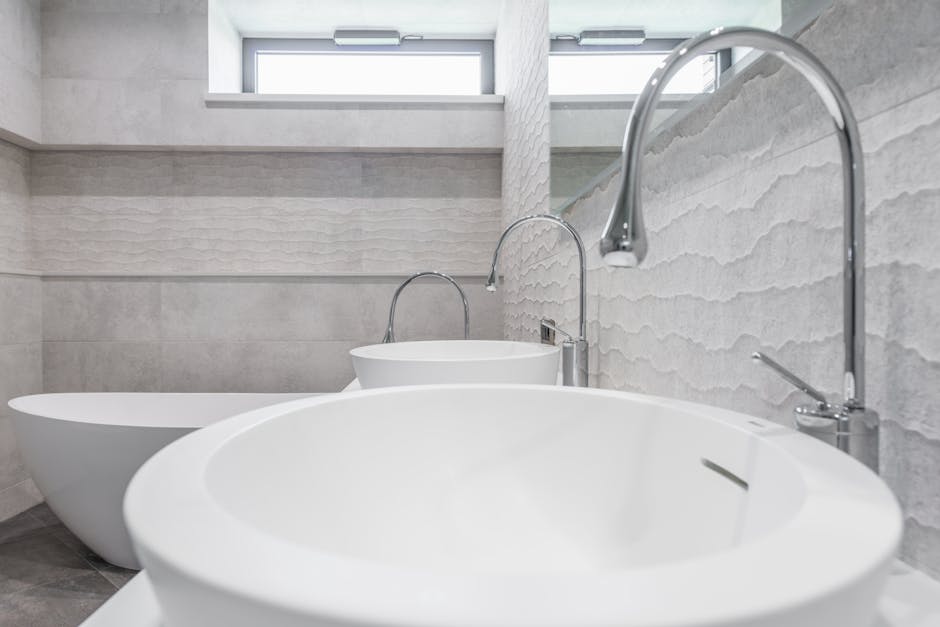
When selecting fixtures, the goal is to find the intersection of internal valve quality and external finish durability. Many cheap faucets use plastic intake shanks that are prone to cross-threading and leaks. Research into mid-range brands reveals that certain entry-level models from major manufacturers use the same ceramic disc cartridges as their premium counterparts. The Moen Adler One-Handle High Arc Faucet (approx. $65) is a prime example. While the exterior shell is simple, the internal 1255 Duralast cartridge is engineered for long-term reliability.
| Model | Approx. Price | Pro | Con |
|---|---|---|---|
| Moen Adler 84603 | $65 | Duralast ceramic cartridge prevents leaks | Plastic pop-up drain assembly |
| Delta Lahara 2538-MPU-DST | $130 | Diamond Seal Technology lasts 2x longer | Higher initial price point |
| Pfister Brea F-048-BRKK | $95 | Includes Pforever Seal ceramic disc | Finish can be sensitive to harsh cleaners |
The showerhead is another area where a small investment changes the daily experience. The Kohler Forte Multi-Function Showerhead (approx. $75) utilizes an internal induction system to increase water velocity without increasing volume. This is a technical upgrade over standard $20 hardware-store options that often have uneven spray patterns. A common mistake in cheap renovations is buying “no-name” fixtures from online marketplaces. While they look modern in photos, they often lack standard US plumbing certifications (like cUPC), which can lead to insurance claims being denied if a failure causes water damage. Stick to brands with readily available replacement parts at local hardware stores.
Toilet replacement is rarely necessary unless the porcelain is cracked or the internal trapway is perpetually clogged. However, if you must replace it, the Project Source 2-piece Dual Flush (approx. $100) is a functional choice, though the Glacier Bay High Efficiency (approx. $150) offers better flush power ratings (MaP scores). If the porcelain is fine, simply replacing the seat with a slow-close model like the Bemis 1500EC ($25) and swapping the flush lever for a metal one improves the “feel” of the appliance significantly.
How can you save money on bathroom flooring and wall treatments?
Traditional ceramic tile requires a subfloor preparation that is often beyond the scope of a budget DIY project. If you are dealing with dated linoleum or cracked tiles, Luxury Vinyl Plank (LVP) or Luxury Vinyl Tile (LVT) is the most pragmatic solution. Specifically, look for a product with a rigid core (SPC) and a minimum 12mil wear layer, such as the LifeProof Rigid Core LVP (approx. $3.20/sq ft). These floors are 100% waterproof and can be installed directly over existing hard surfaces, saving the labor cost of rip-out and the expense of new cement board underlayment.
Wall treatments provide a significant opportunity for cost savings. Instead of tiling an entire wall (wainscoting style), consider moisture-resistant beadboard or “faux-tile” panels. A 4×8 sheet of moisture-resistant MDF beadboard costs roughly $35 and can cover a large area quickly. When painted with a high-quality semi-gloss paint, it provides a classic look that hides wall imperfections. For the wet areas, if the existing tile is structurally sound but aesthetically offensive, tile paint is a viable medium-term solution. The Rust-Oleum Tub & Tile Refreshing Kit (approx. $50) uses an epoxy acrylic formula that bonds to ceramic. However, the success of this product depends entirely on the acid-etching preparation phase. If the surface isn’t perfectly de-glossed, the paint will peel within months.
Another often-overlooked wall strategy is the use of “removable” wallpaper designed for high-humidity environments. Brands like NuWallpaper (approx. $30/roll) offer vinyl-coated options that can withstand steam. This allows for bold patterns that would be prohibitively expensive to achieve with designer tiles. The key to any budget wall treatment is the transition; using a simple PVC baseboard (approx. $2/linear foot) ensures that water sitting on the floor doesn’t wick into the walls, preventing future rot and mold costs.
Is it cheaper to refinish or replace a bathtub and vanity?
This decision requires a careful look at the surrounding infrastructure. Replacing a bathtub typically costs between $400 and $800 for the unit itself, but the labor to remove the old tub, repair the surrounding tile, and reconnect the drain often pushes the total to over $3,000. In contrast, professional reglazing costs roughly $500 to $700. If you are on a strict budget, a DIY refinishing kit is the cheapest option, but it has a limited lifespan of 3-5 years. A higher-end DIY alternative is the Ekopel 2K Bathtub Refinishing Kit (approx. $180). Unlike spray-on kits, this is a pour-on epoxy that creates a much thicker, more durable coating that can actually fill minor chips and scratches.
Professional bathtub liners are often marketed as a middle ground, but they frequently cost as much as a full replacement ($1,500 – $2,500) and can trap water between the liner and the old tub, leading to hidden mold growth. Avoid these if the goal is long-term value.
Vanity replacement follows a similar logic. A new 30-inch vanity with a stone top can easily cost $600 at a big-box store. However, if the cabinet box is solid wood, it is almost always better to keep it and replace only the top. You can often find “remnant” granite or quartz pieces at local stone yards for $100-$200. Pairing a remnant top with a new vessel sink or a standard drop-in like the Kohler Caxton (approx. $80) results in a custom look for half the price of a pre-fabricated unit. If the vanity must go, check the “scratch and dent” section of home centers. A small ding on the side of a cabinet that will be hidden against a wall can result in a 50% discount on a high-quality piece.
What electrical and plumbing upgrades are worth the investment during a cheap renovation?
Safety and moisture control should take priority over aesthetics in any bathroom. If your bathroom lacks a GFCI (Ground Fault Circuit Interrupter) outlet, installing one is a non-negotiable safety upgrade. A standard GFCI outlet like the Leviton SmartlockPro costs about $20 and can be installed in 30 minutes by anyone comfortable with basic wiring. This prevents electrical shock in wet environments and is a requirement for modern building codes.
Ventilation is the most critical “appliance” in the bathroom. A weak or noisy fan means the homeowner won’t use it, leading to steam buildup that destroys your new paint and encourages mold. The Panasonic WhisperCeiling FV-0511VQ1 (approx. $160) is a research-backed favorite because it operates at less than 0.3 sones. It is virtually silent, ensuring it actually gets used. If your current fan is a standard 50 CFM unit, upgrading to a 110 CFM fan will significantly extend the life of your renovation materials by keeping the room dry.
For lighting, move away from incandescent bulbs. Integrated LED fixtures or high-CRI (Color Rendering Index) LED bulbs are essential. The Philips Ultra Definition LED bulbs (approx. $15 for 4) provide a light quality that mimics natural sunlight, which is vital for grooming tasks. If you have the budget for one “luxury” electrical item, a heated towel rack like the Amba Radiant Small (approx. $180) uses very little electricity and adds a high-end feel to a master bedroom-adjacent bathroom. It also helps towels dry faster, reducing that damp bathroom smell and the frequency of laundry cycles.
How to plan a bathroom remodel timeline to avoid hidden costs?
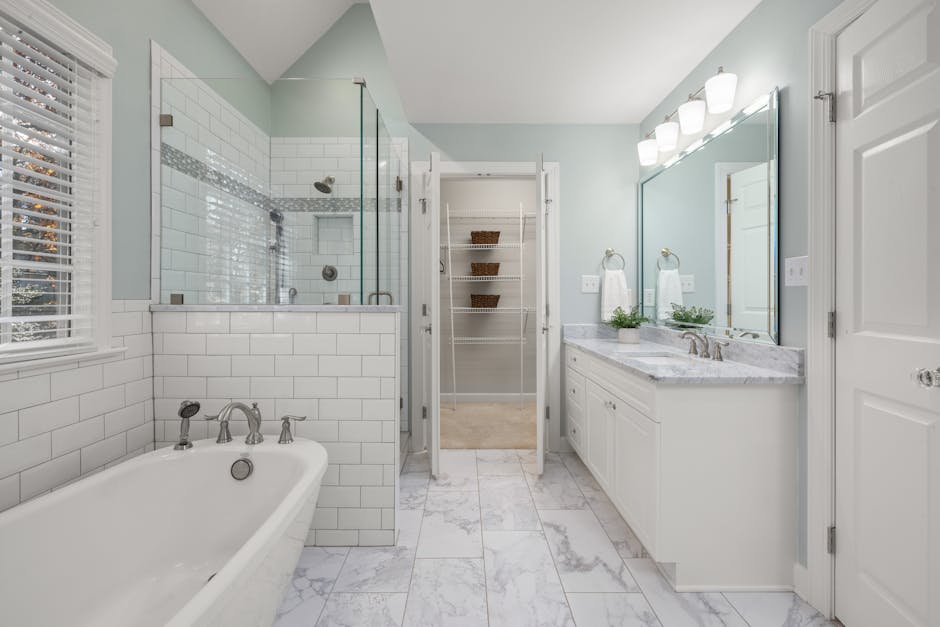
The most expensive part of a cheap renovation is the “while we’re at it” syndrome. This occurs when a simple faucet swap turns into a valve replacement, which turns into a wall repair. To avoid this, perform a pre-renovation audit. Check the shut-off valves under the sink and behind the toilet. If they are the old multi-turn style, they are likely to leak once you touch them. Budgeting $15 each for new SharkBite Quarter-Turn Compression Valves before you start will save you an emergency Sunday trip to the hardware store when the water won’t turn back off.
- Day 1: Audit and Ordering. Test all valves, measure your vanity, and order fixtures. Shipping delays are the primary cause of project creep.
- Day 2-3: Surface Prep. Clean every surface with TSP (Trisodium Phosphate). Sand the vanity. Remove old caulk with a dedicated tool. This is the most tedious but important phase.
- Day 4: Painting and Refinishing. Apply your primer and first coats of paint. If you are refinishing the tub, do it now so it can cure for 48-72 hours.
- Day 5: Flooring. Lay your LVP or LVT. Since it’s a floating floor, this usually takes 4-6 hours for a standard bathroom.
- Day 6: Fixture Installation. Install the new faucet, showerhead, and light fixtures. Replace the toilet seat.
- Day 7: Finishing Touches. Re-caulk the tub and sink using a high-quality 100% silicone like GE Advanced Silicone 2. Do not use cheap acrylic caulk in a bathroom; it will shrink and crack within a year.
By following a strict sequence, you minimize the time the bathroom is out of commission. This is especially important if you are renovating a master bath connected to a bedroom, where dust and noise can disrupt sleep. Use plastic sheeting to seal the doorway and keep the work area contained. Realizing that a renovation is a series of small, manageable tasks rather than one giant hurdle is the key to finishing on time and under budget. Every dollar saved on demolition is a dollar that can be spent on higher-quality touchpoints that you will interact with every single day.