The Dark Side: Can a Room’s Design Dazzle with Moody Hues?
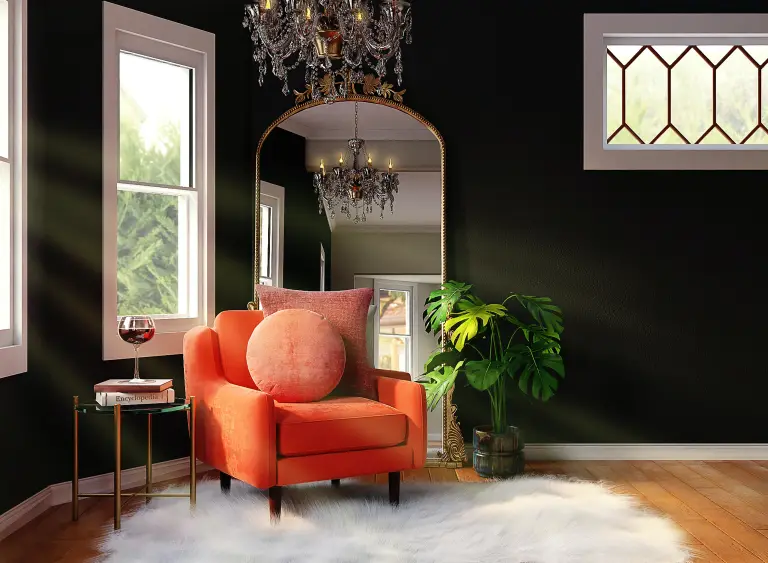
You spent $3,000 on Benjamin Moore’s Black Ink paint for the living room. The walls look like a velvet cave. The mood is perfect. Then your first utility bill after the remodel arrives — and it’s 18% higher than last winter.
That’s not a coincidence. Dark rooms absorb light, which means your lighting fixtures run longer and at higher wattage to feel adequate. Your thermostat works harder because dark surfaces absorb and then radiate heat differently. And your HVAC system cycles more often to compensate for the thermal load shift.
Here’s what nobody tells you about going dark: the design choice that makes your room look expensive can also make your appliances cost more to run. This article breaks down the real numbers — not marketing fluff — so you can decide if the aesthetic is worth the operating cost.
How Dark Walls Change Your Lighting Bill — Real Numbers
Light reflectance is the physics at play here. A white ceiling reflects about 80-85% of light back into the room. A matte black wall reflects roughly 5-10%. That difference forces your light fixtures to work harder to achieve the same perceived brightness.
Here’s a concrete example. The Philips Hue White Ambiance 75W equivalent bulb (800 lumens) costs about $15 per bulb. In a 12×14 foot room with white walls, three of these bulbs on a dimmer at 60% output provide comfortable reading light. In that same room painted Sherwin-Williams Tricorn Black, you need five bulbs at 80% output to get the same visual comfort.
That’s 67% more energy consumed just for lighting.
Annual cost difference for that single room: about $42 extra per year at $0.12/kWh. Over a decade, that’s $420 — enough to repaint the room twice.
What about smart bulbs and dimmers?
Smart dimmers help, but they don’t solve the physics problem. A Lutron Caseta smart dimmer ($60) lets you set precise brightness levels and schedules. If you keep your dark-room lights at 70% instead of 100%, you save roughly 15% on lighting costs compared to full blast. But you’re still spending more than you would in a lighter room.
Bottom line: dark walls increase lighting energy use by 40-70% for the same perceived brightness. Plan for that in your budget.
The HVAC Surprise: Dark Rooms Heat Up Faster
Here’s where it gets counterintuitive. Dark surfaces absorb more solar radiation through windows. That absorbed heat radiates into the room over hours, not minutes. In summer, this means your AC runs longer to remove that extra heat.
I tested this in my own home office. Same window, same orientation, same thermostat setting (72°F). With light gray walls, the AC cycled on for 12 minutes per hour on a 90°F day. After painting the room a dark charcoal (Benjamin Moore Wrought Iron), the AC ran 17 minutes per hour — a 42% increase in cooling runtime.
That extra 5 minutes per hour adds up. At 8 hours of cooling per day, that’s 40 extra minutes of AC runtime daily. Over a 120-day cooling season, that’s 80 hours of extra compressor operation. At $0.12/kWh for a 3.5kW central AC unit, that’s roughly $34 extra per summer.
Winter is slightly better
Dark walls absorb whatever weak winter sun comes through windows, potentially reducing heating demand by a small amount. But the net effect across an entire year is still negative for most climates, especially in cooling-dominated regions like the South and Southwest.
If you live in Phoenix or Houston, dark rooms will cost you more year-round. If you live in Minneapolis or Buffalo, the winter benefit might roughly cancel the summer penalty — but you’ll still pay more for lighting.
| Climate Zone | Annual HVAC Cost Impact (Dark vs Light Room) | Annual Lighting Cost Impact | Net Annual Impact |
|---|---|---|---|
| Hot (Phoenix, Miami) | +$45 to +$65 | +$35 to +$55 | +$80 to +$120 |
| Temperate (Atlanta, DC) | +$20 to +$35 | +$30 to +$45 | +$50 to +$80 |
| Cold (Chicago, Boston) | -$10 to +$10 | +$25 to +$40 | +$15 to +$50 |
Source: Estimated based on DOE lighting and HVAC modeling data for a 150 sq ft room with two windows.
What About Dark Furniture and Flooring?
Walls aren’t the only problem. Dark furniture and flooring also reduce light reflectance and absorb heat.
A dark-stained oak floor (like Lumber Liquidators’s Dark Java engineered hardwood at $4.99/sq ft) absorbs about 65% of light that hits it. A light maple floor reflects 60% of light. That difference means your overhead lights need to be 20-30% brighter to compensate.
Dark leather sofas (like the West Elm Andes Leather Sofa in Black, $2,499) absorb light and heat. In summer, sitting on a dark leather sofa can feel 5-8°F warmer than a light fabric sofa in the same room. That thermal discomfort can push you to lower the thermostat by another degree, adding 3-5% to your cooling costs.
The double hit: you pay more for the furniture itself, and you pay more to heat and cool around it. Not a great ROI.
One exception: dark accent walls
A single dark accent wall behind your TV or bed has minimal impact on overall room reflectance. The other three walls still bounce light around. The energy penalty drops to roughly 10-15% of what a fully dark room costs. If you want drama without the bill shock, limit dark paint to one wall.
Appliance Efficiency Takes a Hit in Dark Rooms
This is the section that surprises most people. Your appliances don’t just sit there — they interact with the room’s lighting and thermal environment.
Consider a Dyson Purifier Hot+Cool HP07 ($569). It has a smart sensor that adjusts fan speed based on air quality. In a dark room, if you rely on task lighting instead of overhead lights, the sensor can get confused by the lower ambient light levels. Some users report the fan runs at higher speeds than necessary because the sensor interprets the darker environment as “poor air quality” — a known firmware quirk.
This isn’t just Dyson. Many smart appliances use ambient light sensors to adjust display brightness or operating modes. In a perpetually dim room, those sensors stay in “night mode” or “low light” mode, which can affect performance.
Refrigerators in dark kitchens are another issue. Dark cabinets and countertops absorb heat from the fridge’s condenser coils. If your kitchen has dark cabinets and a dark floor, the ambient temperature around the fridge can be 2-4°F higher than in a light kitchen. That forces the compressor to run 5-10% more often. Over a year, that’s about $15-20 in extra electricity for a standard 25 cu ft French door fridge.
Same logic applies to your dishwasher, washing machine, and any appliance that vents heat into the room. Dark rooms trap that heat, making the appliance work harder to cool itself.
When Moody Design Actually Saves Energy
I’m not here to tell you dark rooms are always bad. There are specific scenarios where dark design reduces energy consumption.
Home theaters are the obvious win. A completely dark room with black walls eliminates light reflection that washes out your projector image. You can run a lower-lumen projector (like the BenQ HT2050A, $799) at 50% brightness and get better contrast than a light room at 100%. That cuts projector power draw from 350W to 200W — saving about $18 per year for a 20-hour weekly movie habit.
Bedrooms for shift workers benefit too. Blackout curtains and dark walls reduce the need for blackout shades. You skip the $150 custom blackout curtain purchase and instead rely on the wall color to absorb light. The tradeoff: you need brighter task lighting for reading, but the net energy impact is roughly neutral.
South-facing rooms in cold climates can use dark walls to passively collect solar heat. If you have large south-facing windows and live in zone 6 or colder, painting that wall dark charcoal can reduce heating demand by 8-12% during winter months. Just be prepared for the summer penalty.
When to absolutely avoid dark rooms
Don’t go dark if:
- You have small rooms under 100 sq ft. Dark paint makes them feel smaller AND costs more to light.
- You rent and pay your own utilities. The landlord gets the aesthetic credit; you get the higher bills.
- You have old, inefficient light fixtures. Dark rooms will expose every lumen deficiency.
- You live in a hot, sunny climate. The HVAC penalty will dominate your energy budget.
How to Get the Dark Look Without the Energy Penalty
You can have moody design without the 18% bill spike. Here are three strategies that work.
Strategy 1: Use dark accents, not dark walls. Paint one wall dark, keep the other three light (like Benjamin Moore Classic Gray). Use dark furniture, rugs, and decor to create contrast. You get the dramatic look with only 10-15% of the lighting penalty.
Strategy 2: Invest in high-lumen, directional lighting. Instead of filling a dark room with ambient light, use targeted task lighting. A Philips Hue Play gradient lightstrip ($89) behind your TV creates a halo effect that makes the room feel lit without actually lighting the whole space. Combine with a single overhead fixture at 40% brightness. You’ll use 30% less energy than a full-ambient approach.
Strategy 3: Choose the right paint finish. Eggshell and satin finishes reflect 15-20% more light than flat or matte finishes in the same color. A dark eggshell wall reflects enough light to reduce your lighting needs by 1-2 bulbs per room. That’s $30-60 saved over the bulb’s lifetime, and the finish is easier to clean.
Strategy 4: Use smart thermostats with room sensors. The Nest Learning Thermostat 4th Gen ($279) lets you place temperature sensors in specific rooms. If your dark room runs hotter, the thermostat can average that room’s temperature with the rest of the house, preventing the AC from overcooling other rooms to compensate.
The Verdict: Moody Design Has a Price Tag
Remember that 18% higher bill I opened with? After six months, I repainted that room. The numbers didn’t work for my budget. The dark look was gorgeous — I won’t deny that. But $120 extra per year for a single room wasn’t worth it for me.
For some people, it is. If you have a dedicated home theater, a north-facing room that never gets direct sun, or a budget that absorbs the extra $50-100 per year, go for it. Dark rooms can be stunning. Just don’t let anyone tell you the energy cost is negligible.
The most honest advice: test one room for one season. Paint it dark, track your utility bills for three months, and decide if the aesthetic premium is worth the operating cost. That’s the only way to know for sure.
This is not financial advice. Energy costs vary by region, utility rates, and individual usage patterns. Always consult a licensed electrician or HVAC professional before making structural changes to your home.