Advice and Ideas For Minimalist Decoration
The average American home contains over 300,000 objects. That figure comes from UCLA’s Center on the Everyday Lives of Families, and it explains why minimalist decoration is searched millions of times each year — people feel buried and want a practical way out. The problem: most advice is either too abstract (just own less, feel free) or too expensive ($3,000 Japandi credenzas, $800 linen curtains). This is a direct breakdown of what minimalism actually requires, which specific objects are worth buying, and what to stop doing.
What Minimalist Decoration Actually Means
Minimalism gets misrepresented consistently. Pinterest boards show sterile white rooms with zero personality. Instagram shows $20,000 apartments with three objects in them. Neither is a useful reference for a real home that real people live in.
The better definition comes from architect Ludwig Mies van der Rohe: “less is more.” Not less as in empty — less as in every object earns its presence. That is the operative test. Does this item earn its place in this room? If you cannot answer yes immediately, it probably does not belong.
Intentional Selection, Not Deprivation
Most people approach minimalism as a removal exercise. They strip things out until the room feels bare, then feel dissatisfied and start adding things back. That is the wrong direction.
The correct method: mentally empty the room first, then ask what earns a spot back in it. Every piece returns by serving a real function, looking good doing it, or both. A room with ten deliberately chosen pieces reads as more minimalist than a room with four pieces placed without any intention behind them.
Japanese designer Kenya Hara describes empty space as a resource, not a deficit. Muji built an entire product company on this principle — objects stripped of unnecessary decoration, designed to disappear into the background until needed. That is the reference point. The object serves you quietly. It does not ask for attention.
Minimalism Room by Room
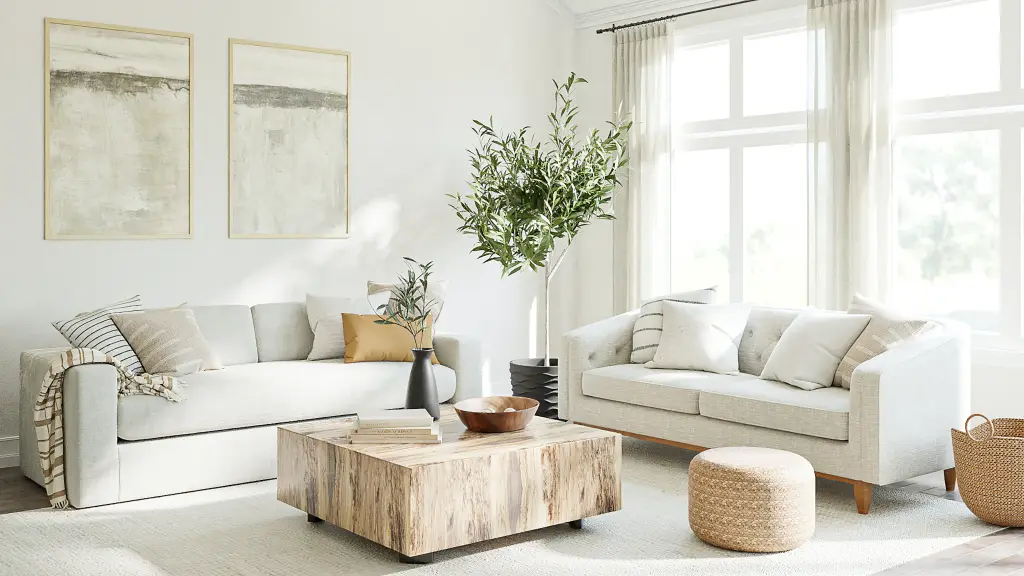
In a living room: one sofa, one accent chair, one coffee table, one rug. No more than three objects on any single surface at once. One or two pieces of artwork per wall, maximum. Each additional item needs a stronger justification than the previous one.
In a kitchen: countertops clear except for daily-use items. One knife block or magnetic strip. A single primary cooking appliance visible. Everything else lives in cabinets. The Muji Polypropylene Box range (from $6 per unit) is built for exactly this — stackable, translucent, designed to be invisible inside a drawer or cabinet while keeping contents organized and accessible.
In a bedroom: bed, two nightstands, one dresser. No more than two decorative pillows. No visible cables. The moment you cannot see the floor from the doorway, the minimalist effect has already collapsed.
The 1-In-1-Out Rule
Every minimalist designer recommends some version of this: before bringing anything new into the space, something existing must leave first. Almost no one actually does it consistently.
The rule works because it forces a direct comparison. Is this new thing better than what it is replacing? If the answer is no — or even “I’m not sure” — the new object does not come home. For most people, applying this rule alone cuts impulse purchases by more than half. Not willpower. A filter.
Minimalist Color Palettes: Choosing the Right One
Color is where most people either commit to minimalist decoration or quietly abandon it. The default assumption is always white. White works — but it is less forgiving than most alternatives once you are living in it daily rather than photographing it for a blog.
| Palette | Core Colors | Best Room Size | Mood | Common Mistake |
|---|---|---|---|---|
| Scandinavian White | Bright white, light grey, natural birch | Any — expands small spaces visually | Airy, clean, calm | Reads cold without warm wood accents |
| Warm Neutral | Cream, off-white, sand, taupe | Living rooms and bedrooms | Inviting, grounded, livable | Too many similar tones blur into monotony |
| Japandi | Greige, dark charcoal, natural linen | Medium to large rooms | Sophisticated, calm, earthy | Looks unfinished without quality furniture |
| Monochrome Dark | Charcoal, near-black, deep grey | Large rooms only (200+ sq ft) | Bold, focused, dramatic | Overwhelms small rooms entirely |
| Natural Earth | Terracotta, clay, sage, warm brown | Any size | Relaxed, organic, modern | Drifts toward maximalism with too many textures |
Bottom Line: Warm neutrals are the most livable palette for most households. Pure white photographs well and feels difficult to maintain. Cream-to-taupe hides everyday wear better while keeping the clean aesthetic intact. Japandi is genuinely beautiful but requires higher-quality furniture to avoid looking incomplete. If your budget is limited, start with warm neutrals and upgrade individual furniture pieces over time.
Five Mistakes That Ruin Minimalist Spaces
These errors show up in almost every failed attempt at minimalist decoration. Not obscure mistakes — consistently overlooked ones.
- Buying cheap furniture and calling it minimal. A bare room with low-quality pieces reads as unfurnished, not minimalist. Minimalism places the entire visual weight on fewer objects, which means each one faces more scrutiny than it would in a busier room. The IKEA KALLAX shelf ($109, 77x77cm) works because its proportions are deliberate and the finish holds up. Flimsy off-brand alternatives make the same arrangement look incomplete rather than intentional. Quality is not a bonus feature here — it is the entire premise.
- Hiding clutter instead of eliminating it. Clearing visible surfaces while cramming drawers and closets is staging, not minimalism. Disordered storage still creates cognitive noise even when it is invisible. The system must work throughout — not just on the surfaces guests see during a visit.
- Prioritizing appearance over actual use. A chair that looks right in a photograph but nobody sits in gets shuffled awkwardly around the room. Unused objects become visual clutter regardless of their design credentials. The Herman Miller Sayl chair ($695 new, $300–400 refurbished) is expensive, but its open-back mesh design reads visually lighter than most seating options and it gets used every single day. Form and function staying aligned is what keeps minimalist spaces working past the first week.
- Layering textures to compensate for emptiness. After decluttering, a room can feel too sparse, and the instinct is to pile in woven baskets, chunky throws, and linen pillow covers. One texture accent works. Three competing textures turns a minimalist room into maximalism wearing different clothes. Choose one texture element per room and hold the line.
- Ignoring the lighting. Harsh overhead lighting at full brightness destroys minimalist interiors. It flattens depth and makes clean surfaces look clinical instead of calm. The fix: warm-white bulbs (2700K to 3000K color temperature), at least one floor or pendant lamp per functional zone, and dimmers wherever the wiring allows. The Flos Smithfield ceiling pendant ($540) has been a minimalist reference point for twenty years because it delivers one thing — a single clean geometric form, zero ornamentation — and does it without compromise.
The Furniture Decision That Defines the Whole Room
Choose the sofa before anything else in the living room. Most people pick it last — after painting walls and buying accent pieces. That is exactly backwards. In a minimalist space, the sofa carries all the visual weight because there is nothing else to pull attention away from it.
Specific criteria matter here. Low profile (16–18 inch seat height). Straight arms — no rolled or tuxedo arms. Raised on visible tapered legs rather than sitting flat on a platform. Fabric in a solid neutral: grey, cream, navy, or warm linen. No tufted buttons. No nailhead trim. The design should not be asking for the room’s attention.
The West Elm Hamilton sofa (from $1,299, available in over 20 fabric options) checks every box. Straight frame, tapered legs, clean arm profile, proportions that work in rooms between 150 and 350 sq ft of living area. It is not visually interesting — and that is precisely why it works. Minimalist furniture’s job is to recede into the room, not perform for it.
Avoid oversized sectionals in any room under 300 sq ft. They fill space, which is the opposite of the goal. Chesterfield sofas with rolled arms and tufted buttons fight against every other element in a minimalist room. Large L-shaped sectionals in small apartments communicate “we ran out of room to think” regardless of the fabric color chosen.
For dining: the IKEA LISABO dining table ($200, 140x78cm) has tapered legs, a clean rectangular top, and ash veneer that reads as more expensive than it is in a properly edited room. Spend on the sofa. Save on the dining table. Let the editing do the actual work.
Appliances That Actually Fit a Minimalist Kitchen
What Makes an Appliance Minimalist-Compatible?
Three filters: simple form (no unnecessary buttons, edges, or decorative elements), neutral finish (matte black, white, grey, or brushed steel), and single-function clarity. The appliance does one thing well and looks clean sitting on a counter. A machine with a full digital display, LED status indicators, and eleven programmable settings is the opposite of that — regardless of how functionally useful it might be.
The Specific Appliances Worth Buying
The Smeg toaster and kettle set (approximately $150–180 each) is the most consistent recommendation across minimalist kitchen guides. Rounded form, matte finishes, minimal surface detail, available in matte black or cream white. They are recognizable as design objects — which strict minimalists sometimes object to — but they stay out on counters intentionally rather than being stuffed into cabinets after two uses. A counter appliance you actually keep out is more minimalist in practice than a sleeker one you hide.
For blending: the Vitamix E310 ($350) is the right call over cheaper alternatives. One container, one dial, no touchscreen panel. The lid locks cleanly. It stores upright in under 8 inches of counter depth. More importantly — you leave it out. A blender left on the counter by choice looks intentional. One shoved behind a cabinet door because it is ugly says the kitchen lost.
The Nespresso Vertuo Next ($149) handles coffee with a small footprint and single-button operation. Capsule storage sits neatly in a drawer or small container. Compare that to a full espresso setup — portafilters drying on a rack, a tamper mat, a grinder with a hopper — and the Nespresso wins on visual clarity. The full setup only earns its counter space in a large kitchen where the ritual is a daily priority, not an occasional one.
What to skip: any air fryer with an LED panel, the Instant Pot Duo 7-in-1 (genuinely useful appliance, visually very busy), and multi-cookers with ten or more preset functions. These belong in a cabinet. If the cabinet is full, that is a separate conversation.
Storage and Organization Products
The Brabantia Touch Bin (30L, $65) is the most practical minimalist trash can at a real-world price. Matte steel body, closes flush, no visible branding when shut, opens with a single touch. The Vipp 5L pedal bin ($200+) is the design purist’s preference — Danish, all-metal, made to last decades — but hard to justify the cost difference unless the object itself is meant to be noticed. For most kitchens, the Brabantia is the right call without hesitation.
When Minimalism Is the Wrong Style for Your Home
If you collect things — books, ceramics, vintage records, found objects — minimalism will feel like loss, not calm. Forcing the aesthetic onto a collector’s home produces a space designed for a photoshoot that nobody actually wants to live in day to day.
The honest recommendation: most households do not need minimalism. They need editing. Remove what is broken, unused for more than a year, or replaceable without any real regret. Organize what remains. Invest in better quality where there are genuine gaps. You do not need to reach minimalism as a destination to get the thing it actually delivers — a home that feels clear, calm, and like it belongs to the people living in it.