
Bathroom Renovation Ideas UK: 7 Smart Upgrades That Actually Add Value
Most bathroom renovations in the UK follow a predictable pattern: you pick tiles you saw on Instagram, buy a vanity that looks good in the showroom, and discover six months later that the grout is cracking and the shower pressure is pathetic. You spent £8,000 and your bathroom feels worse than before.
That is not a renovation. That is an expensive mistake.
This article walks through seven bathroom renovation ideas that work specifically for UK homes — small Victorian terraces, new-build boxes, and everything in between. Each section covers a specific upgrade, what it actually costs, and the one mistake that kills its value.
1. The Wetroom Decision: When to Convert and When to Walk Away
Wetrooms are the most requested bathroom renovation idea in the UK right now. Open-plan showering, no shower tray, easy cleaning. They look fantastic in magazines.
Here is the reality: a proper wetroom requires a structural tanking system, a floor that slopes at least 15mm per metre, and a linear drain that connects to your existing waste pipe. In a 2026 survey by the National House-Building Council, 43% of wetroom installations developed leaks within two years. The main cause? Inadequate waterproofing under the tiles.
When a wetroom actually works:
- Your bathroom is on a concrete ground floor with access to the soil stack
- You are willing to spend £3,500–£6,000 for a proper installation (not the £1,500 DIY kit)
- You use Schlüter-KERDI or similar membrane tanking, not just tile-backer board
When a wetroom is a bad idea:
- First-floor bathrooms above a living room — one leak means ceiling repair costs
- Homes with joist floors that cannot take the extra weight of a mortar bed
- Anyone hoping to sell within five years — many buyers see wetrooms as a liability
The better alternative for most UK homes is a low-profile shower tray from Bristan or Roca with a glass screen. Costs £800–£1,200 installed, drains properly, and does not require structural changes.
2. Tiles: The Single Biggest Budget Trap in UK Bathrooms
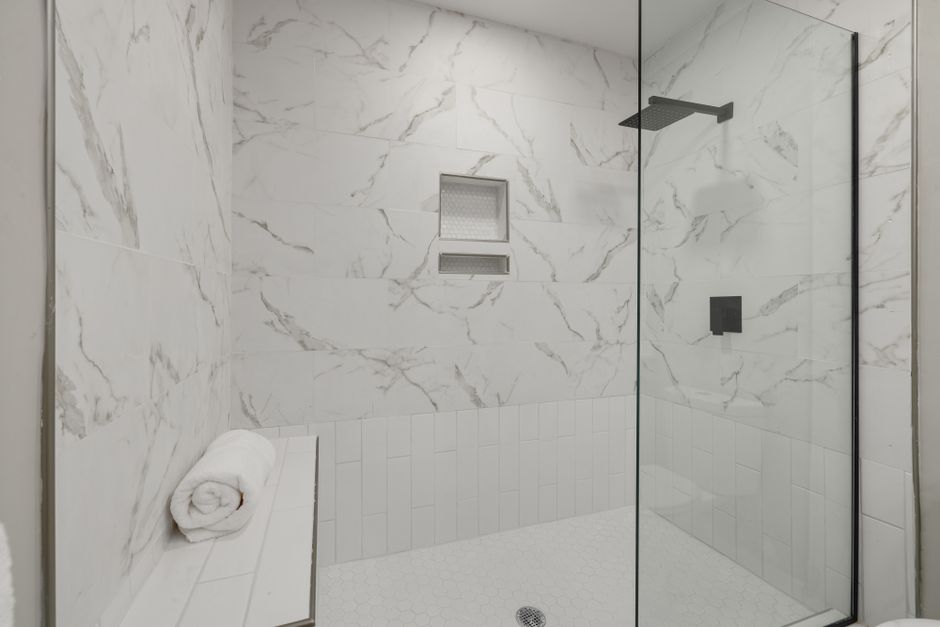
Tiles account for 30–40% of a typical bathroom renovation cost. Most people overspend here because they choose based on looks rather than practicality.
| Tile Type | Cost per m² (installed) | Best For | Failure Mode |
|---|---|---|---|
| Large-format porcelain (60x60cm+) | £55–£85 | Small bathrooms, fewer grout lines | Heavy — can pull away from walls if substrate is poor |
| Metro subway tiles (7.5x15cm) | £40–£65 | Victorian/period homes, classic look | Grout stains quickly; requires sealing every 18 months |
| Hexagonal mosaic (5x5cm) | £70–£110 | Feature walls, shower niches | Impossible to clean grout lines; shows every water spot |
| Large-format marble-effect (90x90cm) | £90–£150 | Statement bathrooms, high-end look | Slips when wet unless rectified edge; very expensive to cut |
The mistake people make: They buy cheap tiles (£20/m²) and cheap labour (£25/m² fitting). The tiles chip, the grout cracks, and within 12 months you are talking about re-tiling. Pay for good installation first, good tiles second.
Porcelanosa and Villeroy & Boch make tiles that actually hold up in UK bathrooms. Expect to pay £50–£80 per m² for the tile alone. That is not cheap. But it is cheaper than doing it twice.
3. The £400 Vanity That Costs You £1,200 in Hidden Work
You see a vanity unit online. £399. Free delivery. Looks great in the photo. You order it, it arrives, and then the problems start.
The plumbing connections are metric. Your UK pipes are imperial. The back panel is unsealed MDF — it swells within three months of bathroom humidity. The drawer runners are 300mm full-extension, but your space only allows 280mm. Nothing fits.
Three specific brands that work in UK bathrooms:
- Victoria + Plum — solid plywood construction, soft-close drawers, UK-specific plumbing. A 600mm wall-hung vanity costs around £550. Expect to pay £150–£250 for installation.
- Bristan — their Eris and Strata ranges use moisture-resistant MDF with a sealed top coat. Not as durable as plywood, but half the price. A 500mm unit runs £280.
- Roca — the Ona range has a ceramic top with integrated basin. No seam for water to leak into. £450 for the unit.
What nobody tells you: Wall-hung vanities require reinforced wall framing. If your bathroom has dot-and-dab plasterboard on thermalite blocks, a 15kg vanity will tear the fixings out within six months. Use resin anchors or toggles rated for 50kg minimum.
4. The Shower Valve That Determines Your Entire Experience
UK water pressure is not consistent. A combi boiler delivers 12–15 litres per minute at 1.5 bar. A gravity-fed system with a tank in the loft gives you 6–8 litres per minute at 0.5 bar. A thermal store can push 20+ litres per minute.
If you install a shower valve rated for high pressure on a low-pressure system, you get a trickle. If you install a low-pressure valve on a high-pressure system, the seals blow within a year.
The three valve types you actually need to know about:
- Concealed thermostatic valves — Best for combi and unvented systems. A Grohe Rapido SmartBox costs £120 and works with 1–5 bar. Requires access panel for servicing.
- Exposed thermostatic valves — Easier to install and repair. The Aqualisa Quartz is the most reliable option at £195. Works from 0.5 bar. No access panel needed.
- Digital shower systems — Aqualisa Q range (£400–£600). Pump built into the controller. Works with any system. Expensive but eliminates pressure issues entirely.
One hard rule: Never buy a shower valve from a general hardware store. Buy from a plumbing specialist — City Plumbing, Plumbase, or directly from Aqualisa or Grohe. The £30 valve from B&Q will leak within two years. The £120 valve from a specialist will last fifteen.
5. Heated Towel Rails: The £200 Upgrade That Changes Everything
UK bathrooms are cold. A heated towel rail is not a luxury — it is the difference between stepping into a warm towel and stepping into wet fabric that smells musty by day three.
Electric vs. dual-fuel:
- Electric-only — Runs off the mains. Costs £30–£50 per year to run if used 4 hours daily. Easy to install. Best for bathrooms without central heating pipes. Brands: Stelrad, Kudox.
- Dual-fuel — Connects to your central heating AND has an electric element for summer use. More expensive (£200–£400 for the rail plus installation). Requires a qualified plumber to connect to the heating loop. Brands: Myson, Carron.
The mistake: Installing a dual-fuel rail without a bypass valve. Without it, when the central heating is off in summer, the electric element heats only the rail — but the water in the pipes below stays cold and causes condensation. You need a bypass valve (£15) fitted by the plumber.
Correct sizing: For a standard 2.4m x 1.8m bathroom, a 600mm x 800mm rail with 10–12 bars is sufficient. Anything larger looks good but costs more to run and takes up wall space better used for storage.
6. Lighting: Why One Central Ceiling Light Ruins Every Bathroom
A single ceiling light in the centre of the room creates shadows. You cannot see your face properly in the mirror. You cannot see the corners where mould grows. You end up adding a cheap LED strip from Amazon that flickers and dies in six months.
The correct lighting layout for a UK bathroom:
- Task lighting at the mirror: IP44-rated LED strips on either side of the mirror, not above. Above-lighting casts shadows under your eyes. Side-lighting eliminates them. The Astro Lighting 2-Light Bathroom Bar (£95) is a solid option.
- Ambient lighting: A dimmable IP44 downlight in the centre. Use 4000K colour temperature — not warm yellow (makes you look jaundiced) and not cool blue (harsh). The Collingwood Lighting H2-Pro is the best downlight for UK bathrooms at £22 each.
- Feature lighting: An LED strip under the vanity or inside a shower niche. Use a dedicated LED driver, not a plug-in transformer. The LAP IP65 LED strip from Screwfix (£18 for 5m) works well.
The failure mode: People buy bathroom-rated lights that are not compatible with LED dimmer switches. Standard trailing-edge dimmers cause flickering. Use a Varilight V-Pro dimmer (£16) designed for LED loads. Without it, your £200 lighting setup buzzes and flickers from day one.
7. Storage: The Hidden Problem That Makes Small Bathrooms Unusable
A UK bathroom averages 3.6 square metres. That is smaller than a standard parking space. You need to fit a toilet, a basin, a shower or bath, and storage for shampoo, toilet paper, towels, cleaning supplies, and the hair dryer.
Most people install a standard vanity with two drawers and then run out of space within a month.
Three storage ideas that actually work in small UK bathrooms:
- Recessed medicine cabinet: Cut into the wall between studs. 400mm wide, 600mm tall, 150mm deep. Costs £80–£150 for the cabinet plus £100–£200 for installation if walls are plasterboard. The Crosswater MPRO recessed cabinet (£145) has a mirrored front and adjustable shelves. Keeps toiletries off the counter.
- Tower storage next to the toilet: A 200mm-wide pull-out tower unit fits in the gap between toilet and wall. Stores toilet rolls, cleaning sprays, spare towels. Victoria + Plum do a 200mm tower for £220. Installs in 30 minutes.
- Over-door rack with a catch: Not the wire rack that falls off. The Simplehuman steel over-door rack (£45) has a locking mechanism that prevents it from sliding. Holds 8kg of products. No drilling required.
The mistake: Buying storage that is not rated for bathroom humidity. Wire racks rust. Unsealed wood warps. Plastic shelves sag. Look for powder-coated aluminium or solid plywood with a lacquered finish. That is the only material that survives a UK bathroom long-term.
If you only take one thing from this article: spend your money on the things you touch every day — the shower valve, the vanity drawers, the towel rail — and spend less on decorative tiles that nobody notices after week one.