
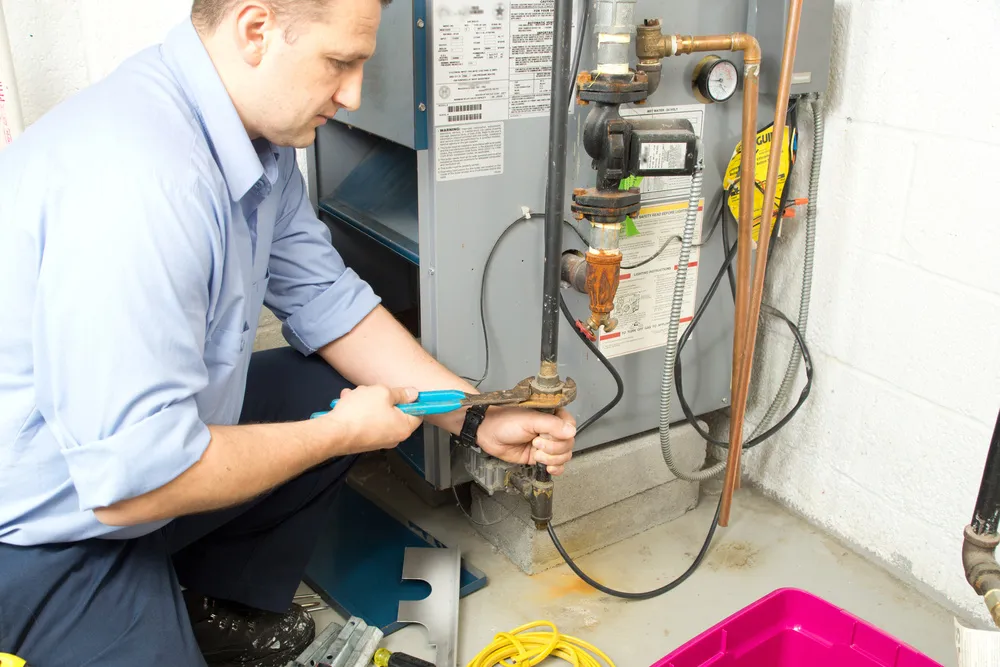
The Benefits Of Hiring A Professional Plumbing Contractor
Water damage is the second most common homeowner insurance claim in the United States — accounting for 29% of all claims, with an average payout of $11,098 per incident, according to Insurance Information Institute data. A significant share of those claims trace back to one preventable decision: hiring an unlicensed plumber, or skipping the professional call entirely.
That is not a scare tactic. It is a risk-adjusted calculation — the same kind insurers run before writing a policy. And the numbers consistently favor hiring a licensed professional plumbing contractor.
The True Financial Cost of Plumbing Work Done Wrong
Homeowners routinely underestimate the downstream costs when plumbing fails. A $200 DIY repair can generate a $12,000 insurance claim. An $85/hour licensed plumber can prevent a $4,000 mold remediation job. The math is not complicated — but it requires looking at the full cost picture, not just the upfront invoice.
Here is how costs stack up across the most common plumbing scenarios:
| Plumbing Scenario | DIY Cost (Parts Only) | Licensed Contractor Cost | Cost If It Fails (Avg. Repair) |
|---|---|---|---|
| Water heater replacement | $500–$900 | $1,000–$1,800 | $3,500–$8,000 (flood/structural) |
| Toilet installation | $120–$300 | $250–$550 | $1,200–$5,000 (subfloor rot) |
| In-wall pipe repair | $80–$200 | $500–$1,500 | $7,000–$20,000 (mold + structural) |
| Main drain line clearing | $15–$50 | $150–$400 | $2,500–$6,000 (pipe collapse) |
| Bathroom remodel plumbing | $800–$2,000 | $2,500–$6,000 | $10,000–$25,000 (code violation redo) |
Insurance Exclusions That Catch Homeowners Off Guard
Standard homeowner policies — whether from State Farm, Allstate, or USAA — explicitly exclude water damage caused by neglect or faulty workmanship. If you installed a water heater without a permit and it fails, your insurer can deny the claim on those grounds. This is a standard exclusion written into HO-3 and HO-5 policy forms, not obscure fine print.
A licensed contractor’s work comes with a workmanship warranty — typically one year minimum — and is backed by their general liability insurance. That is two layers of financial protection you do not get from a YouTube tutorial or a handyman without credentials.
Permit Requirements Vary by State — and the Stakes Are Real
Permit requirements differ significantly by state and municipality. In California, virtually all plumbing work beyond minor repairs requires a permit. In Texas, rules vary by county. In Florida, unpermitted plumbing must be disclosed during a home sale — which can reduce your sale price, trigger mandatory remediation, or kill the transaction entirely.
If a contractor suggests skipping a permit to save money, that is not a deal. It is a liability transfer — from them to you. Always require that permits be pulled before any work begins.
What a Licensed Contractor Actually Delivers on the Job
Licensing is not a bureaucratic formality. In most states, a licensed master plumber has completed 4–5 years of apprenticeship, passed a state-administered examination, and maintains a bond. That credential shapes what actually happens on your job — and the gap between a licensed plumber and an unlicensed handyman is wider than most homeowners expect.
Diagnostic equipment alone illustrates the difference. Companies like Roto-Rooter and Mr. Rooter Plumbing use RIDGID SeeSnake MAX rM200 camera systems — commercial-grade equipment that costs $3,000–$8,000 per unit — to inspect pipe interiors before touching anything. An unlicensed contractor guesses. A licensed one shows you footage of exactly what is broken, where, and why. That precision prevents unnecessary wall demolition, reduces labor time, and catches secondary problems before they escalate into primary ones.
Installation standards are another area where credentials cost real money when ignored. A Moen or Kohler fixture installed incorrectly voids the manufacturer’s warranty. Moen’s limited lifetime warranty explicitly requires installation per their technical specifications — and for supply lines in multi-story buildings, that means code-compliant work by a licensed contractor. Install a Kohler K-596 Simplice pull-down faucet ($250–$400 retail) incorrectly, and the supply valve failure that follows comes entirely out of your pocket, with no recourse to Kohler’s warranty department.
Code Compliance Protects More Than Just Pipes
Plumbing codes exist because improper plumbing injures and kills people. Improperly vented drains allow sewer gas — hydrogen sulfide and methane — to accumulate in living spaces. Cross-connections between potable and non-potable water lines cause serious contamination. The 2026 International Plumbing Code, adopted in some form by most U.S. jurisdictions, addresses hundreds of these failure scenarios in precise technical detail. Licensed contractors know the code. They also know local amendments — and there are always local amendments that supersede the baseline.
When a contractor from Benjamin Franklin Plumbing or a comparable licensed operation pulls a permit and passes municipal inspection, you receive a documented record that the work is code-compliant. That record stays with the property. It is one of the few home improvement investments that directly adds to your home’s documented resale value and reduces the likelihood of a failed buyer inspection.
Their Liability Coverage Shifts Risk Off You
A licensed, insured contractor carries general liability coverage — typically $500,000 to $2 million per occurrence. If a pipe they repaired bursts three weeks later and floods your neighbor’s unit, their insurance pays. If an unlicensed operator does the same job with the same outcome, you bear the liability exposure. Your homeowner’s policy may respond — or may invoke the faulty workmanship exclusion and deny the claim. That ambiguity is not a position worth being in.
Before any contractor starts work, request a certificate of insurance directly. Any legitimate licensed plumber provides one without hesitation. Excuses or delays mean no hire.
Four Concrete Benefits Worth Stating Plainly
- Written workmanship warranty: Most licensed contractors guarantee labor for one to two years. American Leak Detection backs their leak detection and pipe repair work with a written warranty on the labor itself — separate from any manufacturer warranty covering parts or fixtures. That documentation is enforceable.
- Accurate diagnosis, faster: With camera inspection and pressure-testing tools, a licensed plumber typically identifies the root cause of a problem in under an hour. DIY approaches usually address symptoms, not sources — leading to repeat failures at compounding cost.
- Permit handling from start to finish: The contractor pulls the permit, schedules the municipal inspection, and manages all paperwork. You do not need to navigate your county’s permitting portal, take time off work to meet an inspector, or understand local code adoption schedules.
- Emergency availability: National service companies like Roto-Rooter dispatch technicians around the clock, every day of the year. A burst pipe at 2 a.m. does not wait for business hours — and a half-inch supply line under pressure releases roughly 8 gallons per minute into your structure.
Get at least three written quotes before committing to any contractor. Costs vary significantly by region — a water heater installation that runs $1,200 in rural Tennessee can reach $2,800 in San Francisco. Multiple quotes reveal fair market pricing in your specific market, not just the cheapest number available.
Verify license status directly on your state licensing board’s website before calling anyone. Most states maintain a searchable public database. The lookup takes under three minutes and shows whether a license is active, what work it authorizes, and whether any disciplinary actions are on record.
When Skipping a Contractor Is Actually Fine
Replacing a faucet aerator, swapping a showerhead, plunging a slow drain, or changing the flapper inside a toilet tank — none of these require a licensed plumber, and virtually no U.S. jurisdiction requires a permit for them. Save the contractor call for any job that involves opening walls, cutting or joining supply or drain lines, touching water heater connections, or modifying anything that ties into the municipal supply or sewer system.
How to Screen a Plumbing Contractor Before You Sign
The contractor market is uneven. Franchise-backed operations like Mr. Rooter Plumbing and Benjamin Franklin Plumbing maintain consistent licensing, training, and insurance standards across their locations. Independent contractors range from genuinely skilled master plumbers to unlicensed operators with a cargo van and a freshly registered domain. Fifteen minutes of screening eliminates most of the risk before you ever pick up the phone.
Does the Contractor Carry Active Liability Insurance?
Request the certificate of insurance before scheduling the first visit. The COI must show general liability coverage of at least $500,000 — preferably $1 million or more per occurrence — plus active workers’ compensation. Workers’ comp matters specifically because if a technician is injured on your property and the contractor carries no workers’ comp, your homeowner’s liability policy becomes the default backstop. No COI on request means no hire.
Is the License Current and Does It Cover This Scope of Work?
Plumbing licenses have classifications. A journeyman license does not authorize the same scope as a master plumber license, and specialty endorsements — gas lines, backflow prevention, fire suppression — are separate credentials. Verify the license number yourself on your state’s licensing board website: the CSLB in California, the DBPR in Florida, the TSBPE in Texas. Do not accept the license number from the contractor and assume it checks out. Look it up directly.
Is the Estimate Written, Itemized, and Signed?
A verbal quote is unenforceable. A written estimate must break out labor, materials, permit fees, and contingency terms — specifically, what happens to pricing if opening a wall reveals additional damage beyond the original scope. Contractors who resist written estimates are either disorganized or planning to upcharge after work starts. Some states legally require written contracts for jobs exceeding $500; others do not. Demand one regardless of your state’s minimum requirement, and keep a copy.
The average homeowner files a water damage claim once every 11 years, per industry actuarial data. The single most effective action to push that probability down is ensuring every pipe, fitting, and water-connected installation in your home was done by someone carrying the license, tools, and insurance to do it correctly. That is the same risk calculation your insurer runs before deciding whether to write your policy — and what they charge when they do. The 29% of homeowner claims that trace to water damage are not random events. Most are traceable decisions. This is one of the ones you control.