How To Personalise A Rented Apartment
Most renters live in beige boxes. White walls. Grey carpet. Landlord-grade light fixtures. You pay $1,500 a month for the privilege of staring at someone else’s taste.
Here’s the real problem: people either do nothing and hate their home, or they paint the walls, drill holes, and kiss their security deposit goodbye. There’s a middle path. I spent three weekends testing every renter-friendly product I could find — peel-and-stick, tension rods, removable adhesives — and I’m going to walk you through exactly what works, what fails, and what to avoid.
The short version: focus on temporary structural changes (lighting, window treatments, flooring) and removable surface covers (wallpaper, backsplash). Skip the furniture. Your sofa won’t make a white box feel like yours. Changing the light will.
What Actually Makes a Rental Feel Like Home
Your brain doesn’t register a room as “yours” until three things change: the light, the texture, and the color temperature. Furniture is irrelevant here. A gray room with a $3,000 couch still feels like a gray room.
Start with lighting. Landlords install the cheapest flush-mount ceiling fixture they can find — a 12-inch white plastic dome that throws harsh, blue-tinted light everywhere. Swap it. I’m not saying rewire anything. Use a plug-in pendant kit ($25 on Amazon) with a cord cover. Hang it over your dining table or bed. Your brain will register the warm, directional light as intentional. It’s the single biggest change you can make for $30.
Next: color temperature. Most rentals use 5000K “daylight” bulbs — they look like an operating room. Buy 2700K warm-white LED bulbs. Philips makes a 60W equivalent for $8 for a four-pack. Swap every bulb in the apartment. Takes ten minutes. The difference is immediate.
Texture is harder. That’s where peel-and-stick wallpaper comes in. But only use it on one accent wall. Covering all four walls makes a small room feel like a closet.
Why Paint Is Usually a Bad Idea
I know. You want to paint. I did too. But here’s the math: a gallon of decent paint costs $40. Brushes, tape, drop cloths add another $25. Then you have to paint it back to white before you move out — another $65 and a weekend of work. If the landlord notices a shade mismatch, they charge you for repainting the whole room. That’s $200-400 out of your deposit.
There are exactly two exceptions: (1) your landlord explicitly allows painting in the lease, and (2) you get the exact paint code from them and buy a quart to keep for touch-ups. Otherwise, don’t.
The Best Renter-Friendly Products I Actually Tested
I bought and installed 14 different renter-friendly products across three categories: wall treatments, flooring, and window coverings. Here’s what survived and what didn’t.
| Product | Category | Price | Verdict |
|---|---|---|---|
| NuWallpaper Peel & Stick (Navy Geo) | Wallpaper | $45/roll | Best for accent walls. Removes cleanly after 6 months. |
| Smart Tiles Peel & Stick Backsplash (Subway) | Backsplash | $30/pack of 10 | Holds up to steam. Not for behind the stove. |
| RoomMates Grasscloth Peel & Stick | Wallpaper | $38/roll | Good texture, but tears if you reposition too much. |
| Flor Tile (Carpet Squares) | Flooring | $7/sq ft | Best temporary floor. No adhesive. Just lays down. |
| IKEA KVARTAL Curtain Wire | Windows | $12 | No drilling. Tension-mounted. Holds heavy curtains. |
| Command Picture Hanging Strips (Large) | Walls | $10/4 pairs | Holds 12 lbs. Test on a small spot first — some paint peels. |
NuWallpaper is the clear winner for walls. The Navy Geo pattern hides imperfections well. It removes cleanly if you heat it with a hair dryer first. Don’t leave it up longer than 12 months — the adhesive bonds permanently after that.
Smart Tiles backsplash is great for the bathroom or behind a sink. It’s 3mm thick with a gel adhesive. One pack covers about 10 square feet. Do not use it behind a gas stove — heat softens the adhesive and tiles slide down over time.
Flor carpet tiles are the best kept secret in renter flooring. They’re 20×20 inch squares with a rubber backing. No adhesive. They just lay on top of your existing carpet or hard floor. When you move out, pick them up. That’s it. A 10×10 room costs about $700 — cheaper than a rug of the same size, and you can replace individual tiles if one stains.
Three Mistakes That Will Cost You Your Deposit
I made all of these. Don’t repeat them.
Mistake 1: Using nails for heavy items. Even small nails leave holes. Landlords notice. They charge $15-25 per hole to “spackle and paint.” Use Command hooks rated for the weight — they make a 20-pound version for $8. Test the hook on an inconspicuous spot first. Some paint formulations (especially flat paint from 2010-era rentals) peel right off the drywall with the adhesive.
Mistake 2: Installing permanent shelves. I know floating shelves look great. They also require drilling into studs, leaving 3/8-inch holes. When you remove them, you’re patching and repainting. Buy freestanding ladder shelves instead. IKEA’s SATSUMAS ($60) leans against the wall. No holes. Same visual effect.
Mistake 3: Covering outlets or switches. People stick wallpaper over light switches, then cut a hole. The cut edge looks terrible. Measure carefully and use a sharp blade. Or better: remove the switch plate cover, apply wallpaper behind it, then reattach the cover. Clean edge every time.
When NOT to Use Peel-and-Stick Anything
Peel-and-stick is great. Until it isn’t. Here are the situations where you should absolutely avoid it:
- Textured walls (popcorn, orange peel, knockdown). The adhesive only contacts the high points. It will peel off within weeks. Don’t waste your money. Use fabric tapestries or freestanding room dividers instead.
- Bathrooms with no ventilation fan. Steam gets behind the edges. Mold grows. You won’t see it until you peel the wallpaper off and find black spots on your drywall. The landlord will bill you for remediation.
- Kitchen walls behind the stove. Grease aerosolizes and sticks to wallpaper. You can’t clean it without damaging the surface. Use a stainless steel backsplash panel ($40 on Amazon) that hangs on magnetic strips instead.
- Radiator heat. If your apartment has cast-iron radiators, don’t put peel-and-stick on the wall directly behind them. The heat bakes the adhesive. It becomes permanent.
The alternative in all these cases: tension rods and fabric. Run a tension rod from floor to ceiling (they make 9-foot versions for $15). Drape a shower curtain or fabric panel over it. Instant wall covering. Zero damage. Takes 30 seconds to remove.
Lighting Hacks That Change Everything
I mentioned swapping bulbs. Let me go deeper because lighting is the single most impactful change you can make for under $50.
Step 1: Kill the overhead. Turn off the ceiling light. Never use it again. Overhead lighting creates harsh shadows and makes everyone look tired. Instead, use three light sources at different heights: floor lamp, table lamp, and task light.
Step 2: Buy plug-in sconces. IKEA’s KVARTAL system includes a cord cover that sticks to the wall. Run it from a sconce down to an outlet. Paint the cord cover the same color as your wall — it disappears. A pair of sconces costs $40 and makes a bedroom feel like a hotel.
Step 3: Use smart bulbs with warm dimming. Philips Hue White Ambiance bulbs ($50 for a two-pack) let you adjust color temperature from 2200K (candlelight) to 6500K (daylight). Set them to 2700K during the evening. The warm dimming feature mimics incandescent bulbs — as you dim them, they get warmer. Your brain registers this as cozy. It’s worth the price.
Step 4: Hide the TV wires. Nothing makes a rental look more temporary than cables dangling from a wall-mounted TV. Use a cord raceway kit ($12, paintable). Route cables from the TV down to the outlet. Paint the raceway to match the wall. It takes 20 minutes and makes the room look intentional.
The Only Three Things Worth Spending Real Money On
Most renter “hacks” are cheap. That’s fine for temporary fixes. But if you’re staying in an apartment for more than 18 months, spend real money on three things:
1. Custom curtains. Not the $15 IKEA panels. Go to a fabric store, buy 6 yards of a heavy linen-blend ($60-80), and have them hemmed to exactly 1/4 inch above the floor. Hang them on a tension rod that extends past the window frame by 6 inches on each side. This makes the window look bigger. It adds visual height. It costs $120 total and transforms the room more than any furniture purchase.
2. A large rug that fits the room. Not a 5×7 that floats in the middle of the floor. An 8×10 or 9×12. It should anchor the seating area — front legs of the sofa on the rug. Ruggable makes washable rugs in those sizes ($200-400). When you move out, roll it up and take it. Your next apartment will have different dimensions, but the rug works anywhere.
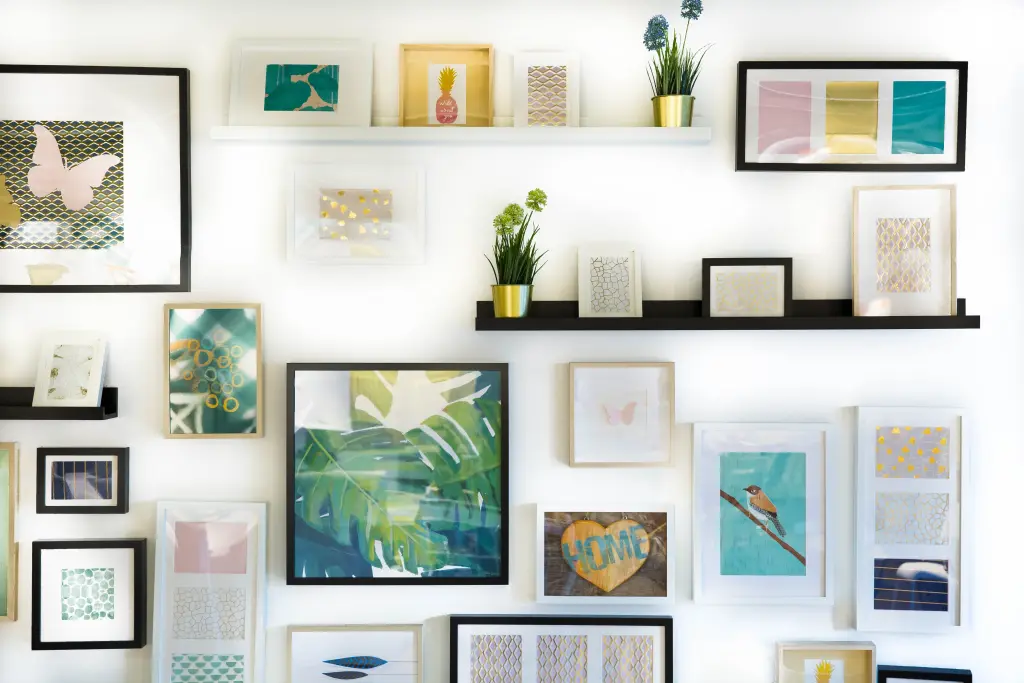
3. Good art with real frames. Not posters with tape. Go to a thrift store, buy 3-4 frames in different sizes for $5 each. Paint them all the same color (black or gold). Put in matted prints from Etsy ($8 each for digital downloads, print at a local shop for $2 each). Hang them using Command strips. It looks curated. It looks expensive. It cost you $40.
The common thread: these are all portable improvements. You own them. They move with you. Your deposit stays intact.